
Lunar New Year 2027
Lunar New Year Red Envelopes: Who Gets One, How Much to Give and What to Avoid
By Kattya Evia-Rhodes, Founder, What I Really Really Want · 18 November 2026 · 6 min read · Dates checked 18 November 2026
TL;DR
- • Lunar New Year 2027 falls on Saturday 6 February (the Year of the Goat).
- • Red envelopes (hongbao in Mandarin, lai see in Cantonese) hold gifts of money. They are usually given to children, and often to elders and younger relatives too.
- • Use crisp new notes in a red envelope. Even amounts are generally preferred, 6 and 8 are considered lucky, and amounts containing 4 are usually avoided.
- • Amounts vary by family and region, so ask if you are unsure.
- • For bigger gifts, one wishlist link can let relatives put money towards a single wish.
In this article
Introduction
Red envelopes are one of the best-known Lunar New Year customs, and one of the easiest to get wrong if you are new to them. Who should give? How much is right? Which numbers should you avoid?
This guide covers the basics in plain English. Customs vary between families and regions, so treat it as a starting point and follow your own family's lead.
When is Lunar New Year in 2027?
Lunar New Year 2027 falls on Saturday 6 February and begins the Year of the Goat (also called the Year of the Sheep or Ram in some traditions). The date follows the lunar calendar, so it moves each year. It is celebrated by Chinese families and by many Vietnamese and Korean families too, each with their own customs.
This guide focuses on the Chinese custom of hongbao. Vietnamese families give lì xì and Korean families give money after a New Year bow, which are similar in spirit.
What are red envelopes?
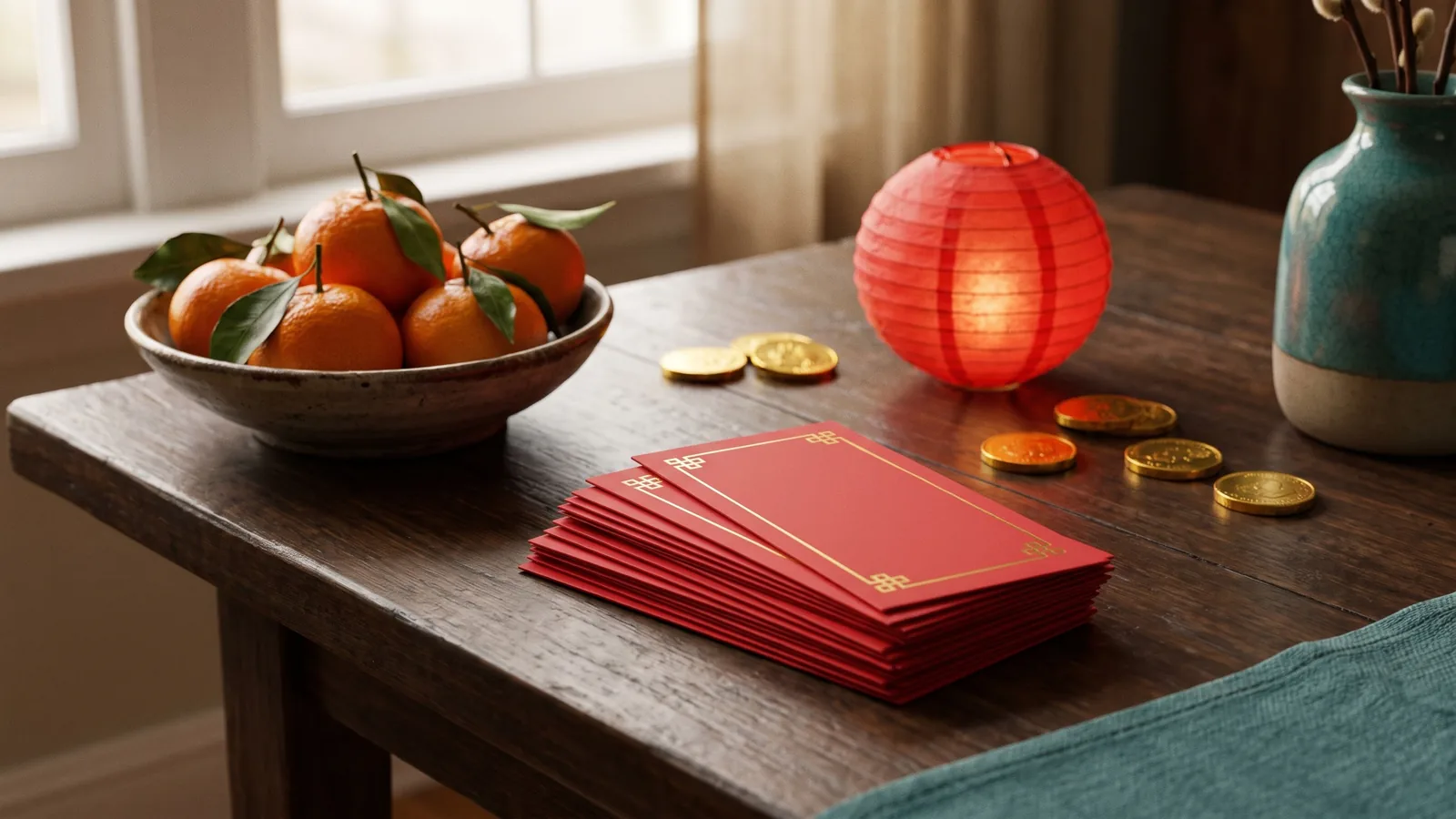
A red envelope, called hongbao in Mandarin and lai see in Cantonese, is a small red packet containing money. Red is the colour of luck and good fortune, and the gift is a way of passing good luck on to the person receiving it.
The envelope matters as much as the money. Giving cash loose, or in a plain white envelope, would feel wrong to many people.
Key takeaway
A red envelope is a wish for luck and a good year, not just a cash payment.
Who gives and who receives?
Customs differ, but in many families:
- • adults and older relatives give red envelopes to children;
- • children and younger relatives may also give them to grandparents and elders as a mark of respect;
- • some families give them to unmarried younger relatives, while married adults give to others;
- • and many employers and friends give small red envelopes too.
If you are visiting someone's family for the first time, ask a relative or friend what is expected. It is a kind and normal thing to ask.
How much should you give?
There is no single right amount. It depends on your relationship, your family's customs and where you live. For children, amounts are often modest. Closer relatives and bigger occasions may be more generous.
Many guides recommend new, crisp notes rather than coins, as a sign of a fresh start to the year. Put the money in the envelope with the notes facing the right way, and hand it over with both hands and a warm greeting.
Lucky numbers and what to avoid
Numbers carry meaning, and some guides differ on the details. Common advice is:
- • even amounts are generally preferred, because good things come in pairs;
- • 6 and 8 are considered lucky, and 8 especially, because it sounds like the word for prosperity;
- • avoid amounts containing 4, because the sound resembles the word for death;
- • and some guides also suggest avoiding odd amounts, though advice varies.
When in doubt, ask someone in the family. Greetings such as “Gong Xi Fa Cai” or “Kung Hei Fat Choi” are warmly received.
Bigger gifts and a shared wishlist
Red envelopes are a natural fit for gifting money, which is why they work so well for children. If a child is saving for something bigger, one wishlist link lets relatives put money towards a single wish instead of each buying something separate.
With What I Really Really Want, several people can contribute to one wish, which is handy when relatives live in different places. Keep the wording friendly and make clear there is no pressure.
Related reading: Have We Got Gift Giving Wrong? and Christmas Wishlist Etiquette
Frequently asked questions
When is Lunar New Year in 2027?
Lunar New Year 2027 falls on Saturday 6 February. The date follows the lunar calendar, so it changes each year.
What is a hongbao or lai see?
A hongbao (Mandarin) or lai see (Cantonese) is a red envelope containing money, given at Lunar New Year to pass on good luck.
Who gives red envelopes?
Customs vary, but adults commonly give them to children, and younger relatives may give them to elders as a mark of respect. Employers and friends sometimes give small ones too.
How much money should go in a red envelope?
There is no fixed amount. It depends on the relationship and your family's customs. Even amounts and crisp new notes are generally preferred.
Which numbers are unlucky for red envelopes?
Amounts containing 4 are usually avoided because the sound resembles the word for death. Many guides also prefer even amounts, and treat 6 and 8 as lucky.
Can I give a gift instead of money?
Some families do, but money in a red envelope is the traditional gift. If you want to give something else, ask what the family prefers.
Sources
China Highlights, Red Envelopes (Hongbao): Significance, Amount, and How to Give
What red envelopes mean, typical amounts and how to give them.
China Highlights, Chinese New Year gift-giving etiquette
Etiquette points on gifts at Chinese New Year.
That's Mags, why Chinese people give red envelopes
Background on the red envelope tradition and its meaning.
About the author
Kattya Evia-Rhodes researches how people create, share and use online wishlists, helping families move beyond traditional gift giving towards more flexible, personalised and sustainable ways to celebrate. This guide is written from a gifting point of view and draws on the sources above. It is not written by a religious authority, so please ask your own family or community about how they celebrate.
Make gifting easier this Lunar New Year
Set up a wishlist in minutes and share it with the people who want to help.
Create your wishlist